Machines don’t warn you before they start. A moment of oversight during maintenance can turn fatal when unexpected energization occurs. That’s why a structured lockout tagout policy and procedure isn’t just compliance paperwork—it’s the backbone of industrial safety.
Across manufacturing, utilities, and construction, hundreds of preventable injuries occur each year due to inadequate energy control. The solution? A robust lockout tagout (LOTO) system that stops equipment from releasing hazardous energy during servicing. This isn’t about ticking boxes for OSHA—it’s about protecting lives.
Let’s break down what a real-world LOTO policy and procedure look like, how to implement them effectively, and where most companies still get it wrong.
What Is Lockout Tagout?
Lockout tagout refers to the standardized process of de-energizing machinery or equipment to perform maintenance safely. The method uses physical locks and warning tags to isolate energy sources—electrical, hydraulic, pneumatic, chemical, or mechanical—so that equipment cannot be accidentally started.
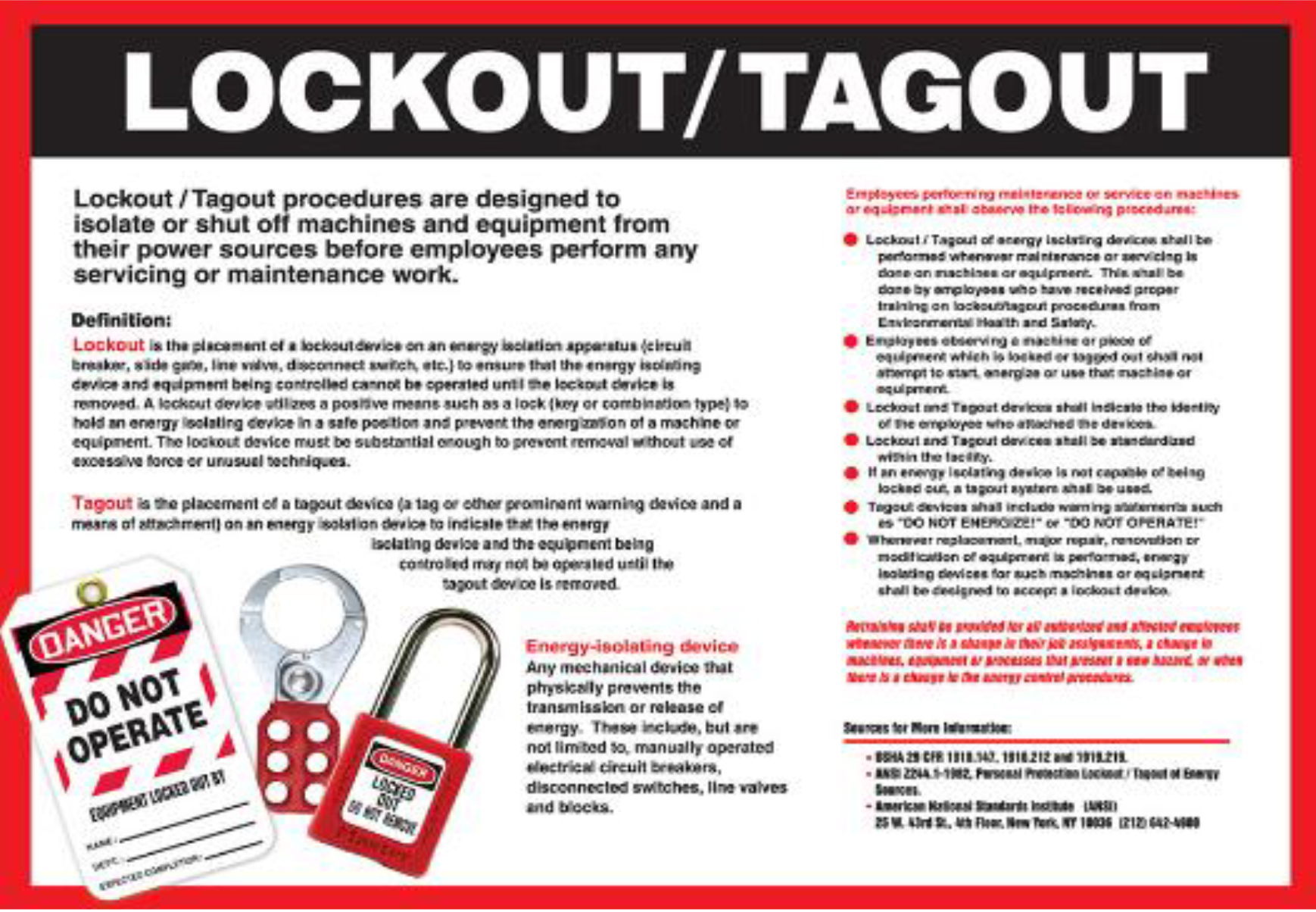
Lockout means placing a lock on an energy-isolating device, like a circuit breaker or valve, so only the authorized employee can remove it. Tagout involves attaching a tag that warns others not to operate the machine while maintenance is underway.
While tagout alone is permitted under certain conditions, lockout is the gold standard. Tags can be ignored. Locks cannot.
#### Real-World Example: A packaging line at a food processing plant needs a belt replaced. Before work begins, the technician shuts down the machine, disconnects the main power, applies a personal lock to the disconnect switch, and attaches a tag stating: “Do Not Operate – Maintenance in Progress.” Only after completing the repair and confirming the area is clear can the lock be removed.
Why OSHA Requires LOTO Procedures
The Occupational Safety and Health Administration (OSHA) outlines lockout tagout requirements in standard 29 CFR 1910.147. Non-compliance isn't just risky—it’s expensive. OSHA routinely cites LOTO violations among its top ten infractions, with penalties reaching tens of thousands per violation.
The core mandate: employers must develop, document, and enforce an energy control program that includes:
- Written lockout tagout procedures
- Employee training
- Periodic inspections (at least annually)
- Proper lockout devices
Failure to meet these can result in catastrophic injury claims, regulatory fines, and operational shutdowns.
#### Common OSHA-Cited LOTO Violations: - Lack of documented procedures - Inadequate employee training - Failure to conduct annual audits - Using tagout without proper risk assessment when lockout is feasible - Incomplete energy source identification
One Midwest auto parts manufacturer was fined $146,000 after a worker lost three fingers when a press unexpectedly cycled during adjustment. The investigation found no formal LOTO policy existed—despite multiple previous near-misses.
This isn’t rare. Nearly 10% of workplace amputations are linked to poor energy control.
Building a Compliant LOTO Policy
A lockout tagout policy sets the foundation. It’s a formal document that outlines your organization’s commitment to employee safety during equipment servicing. Think of it as the “why” and “who” behind your procedures.

#### Key Elements of a LOTO Policy: - Purpose: Clearly state the goal—preventing injury from unexpected energization. - Scope: Define which equipment, departments, and employees are covered. - Responsibilities: Identify roles—authorized employees (perform lockout), affected employees (operate equipment), and supervisors (enforce compliance). - Compliance Reference: Cite OSHA 1910.147 or applicable regional standards. - Policy Enforcement: Specify consequences for bypassing procedures.
This policy should be signed by leadership and reviewed annually.
Developing Step-by-Step LOTO Procedures
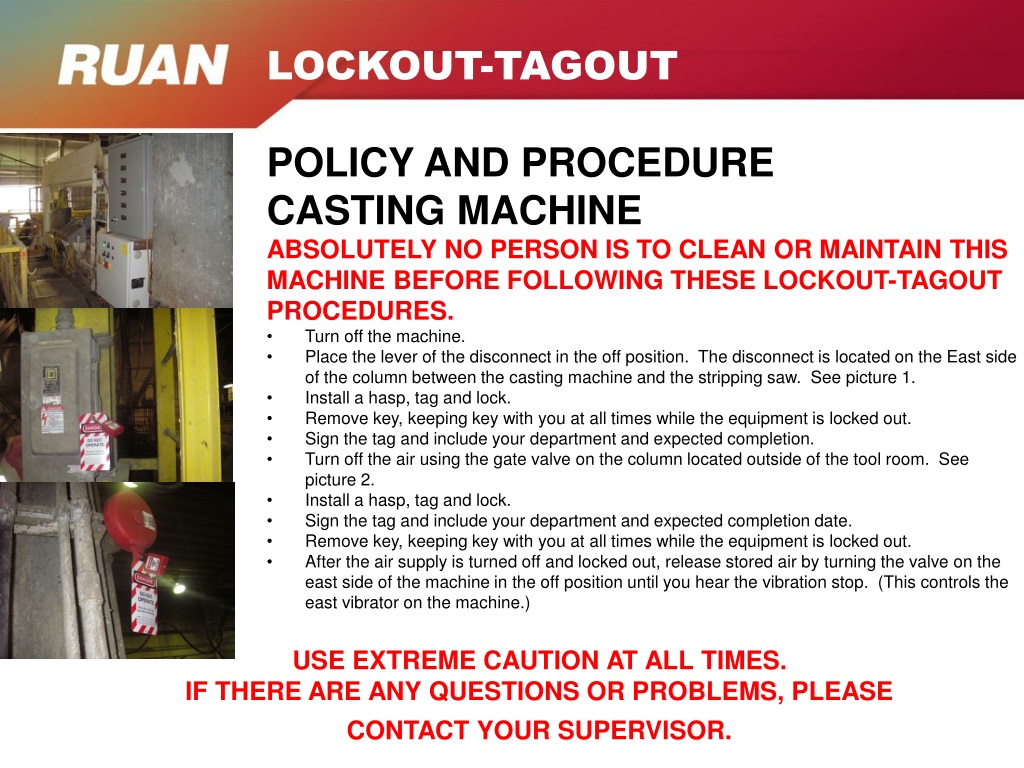
While the policy defines the framework, the procedures are the actionable steps. Each piece of equipment that requires maintenance must have a specific, written LOTO procedure.
- #### Standard LOTO Procedure Steps:
- Preparation
- Identify all energy sources (electrical, hydraulic, stored energy like springs or pressurized tanks). Review the specific LOTO procedure for the machine.
- Notification
- Inform affected employees that maintenance is about to begin and equipment will be shut down.
- Shut Down
- Turn off the machine using normal stopping procedures.
- Isolation
- Disconnect or isolate all energy sources—flip breakers, close valves, block moving parts.
- Application of Locks and Tags
- Each authorized employee applies their personal lock and tag to each energy-isolating device. Group lockout boxes may be used when multiple workers are involved.
- Control of Stored Energy
- Release or block residual energy—bleed lines, ground capacitors, lower suspended loads.
- Verification of Isolation
- Attempt to start the machine (after ensuring it’s safe) to confirm zero energy. Return controls to “off” or “neutral.”
- Perform Maintenance
- Restoration
- Remove tools, re-energize only after confirming the area is clear, and notify affected employees.
#### Example: Conveyor System LOTO Procedure - Energy Sources: 480V electrical, gravity-fed rollers, tensioned belts - Isolation: Main disconnect switch (lockout), tension release mechanism (manual), conveyor stops (physical blocks) - Stored Energy: Belts under tension—relieve before locking - Verification: Attempt to start after lock application—no movement = safe
Without these specifics, workers are forced to improvise—opening the door to error.
Training and Roles in LOTO
Not everyone follows the same steps. OSHA distinguishes between two roles:
- Authorized Employees: Trained to perform LOTO. They shut down, isolate, and lock out equipment. They must understand energy sources, isolation methods, and verification.
- Affected Employees: Operate or use equipment but don’t perform maintenance. They must know the purpose of LOTO and not attempt to restart locked-out machines.
Training must be initial, periodic, and role-specific. Refresher training is required every 12 months or when procedures change.
Critical Tip: Use hands-on drills. Watching a video isn’t enough. Employees should practice locking out actual equipment during training.
One refinery reduced LOTO errors by 68% after introducing quarterly mock lockout drills with surprise audits.
Common LOTO Mistakes That Put Workers at Risk
Even companies with written policies fail in execution. Here are recurring pitfalls:
- Using Master Keys or Shared Locks
- Lockout devices should be personal. A technician using a master key to bypass a coworker’s lock defeats the entire system.
- Skipping Stored Energy Control
- A machine may be electrically off but still hold dangerous pressure or elevation. Example: A mechanic clearing a jam in a hydraulic press was crushed when a trapped piston released.
- Tag-Only Systems Without Justification
- Tags are less secure. OSHA allows them only when lockout is not feasible—but this must be documented and justified.
- Incomplete Procedures
- Generic instructions like “turn off machine” fail. Employees need explicit steps: which breaker, which valve, how to verify.
- Failure to Inspect
- Annual audits aren’t optional. They must involve a certified observer watching a full LOTO cycle and verifying compliance.
A chemical plant avoided a major incident when an auditor noticed that workers were skipping lockout on a mixer—assuming it was "safe" because it ran intermittently. The oversight was corrected before someone entered the vessel during an unexpected startup.
Tools and Devices for Effective LOTO
The right hardware supports compliance. Use standardized, durable equipment.
#### Essential LOTO Devices: - Personal Locks: Safety padlocks, key-retaining type (key only removable when locked). - Lockout Hasps: Allow multiple locks on a single disconnect point. - Group Lockout Boxes: Centralized stations where individual locks are placed during multi-craft work. - Valve Lockouts: Fit over handle valves to prevent turning. - Circuit Breaker Locks: Secure breakers in the off position. - Tags: Must include name, date, reason, and contact info.
Invest in color-coded or numbered systems to improve tracking. Some advanced sites use barcode-scanned locks linked to digital logs for audit trails.
Integrating LOTO Into Daily Operations
LOTO shouldn’t be a special event—it should be routine. Integrate it into work orders, maintenance schedules, and shift handovers.
Workflow Tip: Link LOTO completion to work permit systems. No lockout, no work authorization. This creates accountability.
Use visual cues: floor markings near isolation points, laminated procedure cards at machine stations, or digital tablets with LOTO checklists.
One automotive supplier reduced maintenance downtime by 22% by digitizing LOTO procedures with QR codes on equipment—workers scan, access steps, and log completion in real time.
Final Thoughts: LOTO Is Not a Paper Exercise
A lockout tagout policy and procedure only work when they’re lived, not filed. Complacency kills. Assumptions kill. Skipping one step can end a career—or a life.
Start by auditing your current practices. Are procedures machine-specific? Are locks personal? Are annual inspections actually done?
Then act. Update documents, retrain staff, install proper devices. Make safety visible, repeatable, and undeniable.
Because when the power comes back on, the only thing that should start is the machine—not an accident.
Frequently Asked Questions
What is the difference between lockout and tagout? Lockout uses a physical lock to prevent equipment startup, while tagout uses a warning tag. Lockout is more secure and preferred when possible.
Who is responsible for implementing LOTO? Authorized employees perform lockout; supervisors ensure compliance. Employers are responsible for providing training, equipment, and procedures.
Can multiple people work on the same machine using LOTO? Yes. Each worker applies their own lock. A group lockout box or hasp ensures no one can restart the machine until all locks are removed.
What types of energy must be controlled under LOTO? Electrical, mechanical, hydraulic, pneumatic, chemical, thermal, and gravitational energy—all must be isolated.
How often should LOTO procedures be reviewed? Annually, through an audit where a trained observer verifies a full lockout cycle is followed correctly.
Do all machines need a LOTO procedure? Any equipment with hazardous energy during maintenance or servicing requires a documented LOTO procedure.
Is training required for all employees? Only authorized employees need full training, but affected employees must understand the purpose and limitations of LOTO.
FAQ
What should you look for in Lockout Tagout Policy and Procedure Essentials? Focus on relevance, practical value, and how well the solution matches real user intent.
Is Lockout Tagout Policy and Procedure Essentials suitable for beginners? That depends on the workflow, but a clear step-by-step approach usually makes it easier to start.
How do you compare options around Lockout Tagout Policy and Procedure Essentials? Compare features, trust signals, limitations, pricing, and ease of implementation.
What mistakes should you avoid? Avoid generic choices, weak validation, and decisions based only on marketing claims.
What is the next best step? Shortlist the most relevant options, validate them quickly, and refine from real-world results.