It doesn’t humanize him. It doesn’t reckon with his contradictions. It doesn’t even try to answer the questions it raises. The Michael Jackson movie—intended as the definitive cinematic portrait of one of history’s most enigmatic entertainers—falls short where it matters most: in fulfilling the fundamental promise of the biopic. That promise? To illuminate, not just illustrate.
Instead, what we get is a glossy, choreographed echo chamber: a memorial masquerading as a movie. It delivers spectacle without insight, rhythm without reckoning. For all its technical polish and musical grandeur, it avoids the emotional, psychological, and ethical terrain that made Jackson worth examining in the first place.
This isn’t just disappointing—it’s a dereliction of duty. A biopic about a figure as polarizing and layered as Michael Jackson has no business being neutral. It must engage with the uncomfortable, the unresolved, the painful. The failure isn’t that it offends or misrepresents—it’s that it protects.
A Biopic Should Reveal, Not Just Recap
Biopics exist to go beyond dates, discography, and awards. Their power lies in context: the formative trauma, the private struggles, the internal conflicts that shape public personas. Think of Control (2007), which laid bare Ian Curtis’s isolation and mental health spiral. Or Ray (2004), which didn’t shy from Ray Charles’s addiction and infidelity. These films dramatized, yes—but they also dissected.
The Michael Jackson movie does the opposite. It treats his life like a highlight reel—Motown debut, Thriller, Super Bowl halftime—without exploring how those moments changed him. There’s no deep dive into his childhood abuse under Joe Jackson, no honest look at how that might have warped his relationships and self-image. The film tiptoes around his changing appearance, his reclusiveness, his financial desperation—all critical to understanding the man.
Worst of all, it silences the voices of those who knew him best—especially the women in his life, the staff, and yes, the accusers. Their absence isn’t oversight; it’s editorial cowardice. A biopic that omits dissenting perspectives isn’t truthful—it’s propaganda.
The Jackson Estate’s Influence Is Too Obvious
Let’s be honest: this film doesn’t feel like a work of independent cinema. It feels like a licensed product. The involvement of the Jackson estate, while essential for access to music and archives, has clearly come at a cost. Creative control has been traded for clearance rights.
The result? A narrative sanitized for legacy preservation. The movie dances around the 1993 allegations, mentions the 2005 trial in passing, and never confronts the testimonies in Leaving Neverland. No interrogation of his parenting choices. No analysis of the power dynamics at play in his relationships with young boys. No acknowledgment of the real pain experienced by Wade Robson and James Safechuck.
A truly great biopic would have included dramatized scenes from Leaving Neverland, or at least counterpoint interviews. Instead, it treats those allegations as a PR problem, not a moral one. That’s not art—it’s brand management.
When a film refuses to engage with the most controversial aspects of its subject, it stops being a biography and becomes a eulogy. And eulogies aren’t meant to challenge. They’re meant to comfort. This movie comforts the estate and the fans—but it fails the audience.
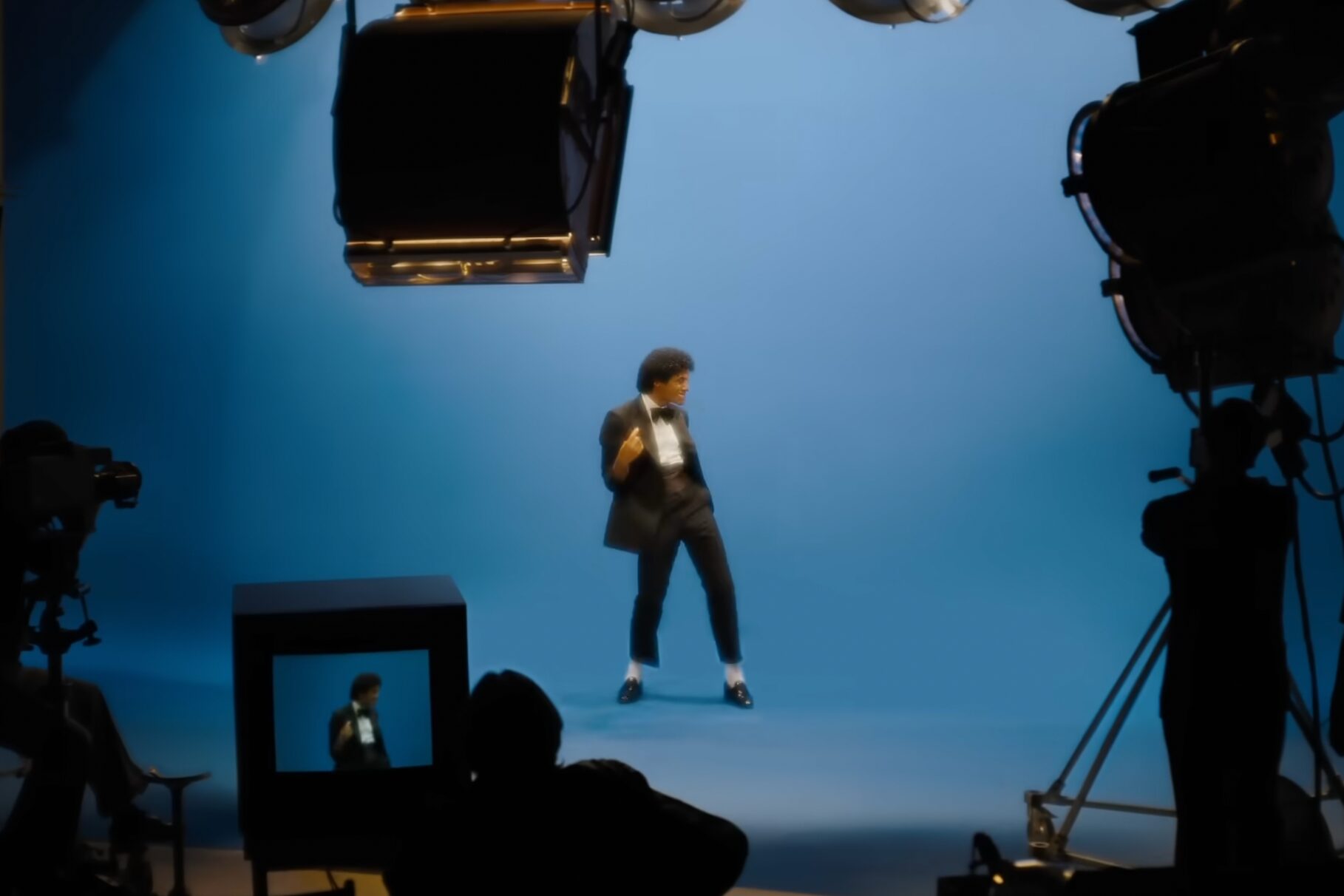
Style Over Substance: The Danger of Aesthetic Worship
Visually, the film is stunning. The recreation of Jackson’s performances—Billie Jean at Motown 25, the Dangerous tour in Bucharest—is immaculate. The costumes, choreography, and lighting are meticulously recreated. But beauty without meaning is just decoration.
There’s a scene in which young Michael dances alone in a mirror, rehearsing moves in a dimly lit room. It’s poetic—but it’s also empty. What is he feeling? Fear? Ambition? Loneliness? The camera lingers, but the script says nothing. The moment could have revealed his obsession with perfection, his alienation from his own body, his desperate need for approval. Instead, it’s reduced to a mood piece.
This is the film’s fatal flaw: it mistakes aesthetic homage for emotional depth. It shows us what Jackson did, but never truly explores who he was. The music is loud, the dance moves precise, but the soul is muted.
Compare this to Bohemian Rhapsody (2018), a flawed film but one that at least attempted to show Freddie Mercury’s internal conflict—his fear of rejection, his struggle with identity and mortality. That film had moments of genuine vulnerability. The Michael Jackson movie has choreography, not catharsis.
The Missed Opportunity to Explore Jackson’s Psychology
Jackson wasn’t just a performer. He was a psychological enigma. A man who built Neverland as a sanctuary from the childhood he never had. A global icon who claimed to love children yet was accused of exploiting them. A billionaire who died in debt. A man who changed his face until he no longer resembled himself.
These aren’t quirks. They’re symptoms.
A courageous biopic would have explored Jackson’s possible diagnoses: body dysmorphic disorder, obsessive-compulsive tendencies, PTSD from childhood abuse, or even dissociative identity. It could have used therapy sessions (real or imagined) as narrative framing, like A Beautiful Mind did with John Nash. It could have dramatized his internal monologues, his self-doubt, his fear of irrelevance.
Instead, the movie treats his eccentricities as givens—part of the “magic.” It never asks why he slept in a hyperbaric chamber, or why he referred to himself in the third person, or why he surrounded himself with yes-men. These weren’t random choices. They were coping mechanisms. Avoiding them isn’t respect—it’s evasion.
The Audience Deserves Better Than Mythmaking
Fans don’t need another monument. They need understanding. The public doesn’t need a concert replay—they need context. The Michael Jackson movie treats its subject like a deity, not a human. And in doing so, it robs him of his complexity.
Jackson was not simply a victim or a villain. He was both. He was a genius who changed music forever, and a man accused of horrific acts. He was a child star broken by fame, and a powerful figure who allegedly used that power abusively. These contradictions aren’t mutually exclusive. A great biopic would have held both truths at once.
But this film can’t. It’s too busy protecting the brand. It’s too afraid of offending the estate, the fanbase, the legacy. And in that fear, it commits the worst sin a biopic can make: it becomes irrelevant.

Documentaries like Leaving Neverland and Michael Jackson: Chase the Truth have already split the audience. The biopic had a chance to bridge that divide—not by taking sides, but by deepening the conversation. Instead, it pretends the divide doesn’t exist.
What a Better Biopic Could Have Done
Imagine a film that opens not on stage, but in a courtroom. Not during the 2005 trial, but during the 1993 investigation. A young Jackson, terrified, flanked by lawyers and handlers. The camera follows him not as a star, but as a defendant. From there, the story unfolds in flashbacks—his rise, his isolation, his relationships—while the legal pressure mounts.
Or picture a structure like The Social Network, where multiple perspectives collide. Friends, employees, family, accusers—all given voice. No single truth, but a mosaic. That’s how you tell a story this complicated.
Or go even further: a biopic that doesn’t star one actor, but several—each portraying Jackson at different ages, with different mannerisms, different voices. A visual metaphor for his fractured identity.
These aren’t pipe dreams. They’re the kind of bold choices that define great cinema. The Michael Jackson movie made none of them. It played it safe. And in doing so, it guaranteed irrelevance.
Conclusion: A Biopic Must Challenge, Not Comfort
The basic duty of a biopic is not to glorify. It’s to investigate. To ask hard questions. To show the scars beneath the sequins.
The Michael Jackson movie fails that duty. It’s a technically proficient, emotionally hollow tribute that prioritizes image over integrity. It remembers the moves, but forgets the man.
Until a filmmaker has the courage to confront Jackson’s legacy in full—his genius, his trauma, his alleged crimes—we won’t have a true biopic. What we have now is a memorial. And memorials are for the dead. Jackson’s story, for all its pain and paradox, still demands to be told.
It’s time for a film that doesn’t flinch.
FAQ
Why is the Michael Jackson biopic considered a failure? Because it avoids the complex, controversial aspects of his life, opting instead for a sanitized, celebratory narrative that fails to explore his psychology or reckoning with serious allegations.
Did the Jackson estate influence the movie’s content? Yes, heavily. Their involvement ensured access to music and archives but likely led to self-censorship on sensitive topics like abuse allegations and personal struggles.
Does the movie address the Leaving Neverland documentary? No. The film completely ignores the claims made by Wade Robson and James Safechuck, making no effort to engage with one of the most significant critiques of Jackson’s legacy.
Is the film accurate in its portrayal of Jackson’s performances? Yes, the recreation of concerts and dance routines is highly accurate and visually impressive—but it emphasizes spectacle over substance.
Could a fair biopic about Michael Jackson ever be made? Yes, but only if it balances his artistic genius with unflinching honesty about the allegations and psychological struggles, giving voice to multiple perspectives.
What makes a biopic successful? A successful biopic reveals inner conflict, provides context for public actions, and doesn’t shy away from contradictions—it humanizes, rather than idolizes.
What should a Michael Jackson biopic have focused on? It should have explored his childhood trauma, evolving identity, relationship with fame, financial issues, and the serious abuse allegations, all while honoring his musical innovation.
FAQ
What should you look for in The Michael Jackson Movie Misses the Mark as a Biopic? Focus on relevance, practical value, and how well the solution matches real user intent.
Is The Michael Jackson Movie Misses the Mark as a Biopic suitable for beginners? That depends on the workflow, but a clear step-by-step approach usually makes it easier to start.
How do you compare options around The Michael Jackson Movie Misses the Mark as a Biopic? Compare features, trust signals, limitations, pricing, and ease of implementation.
What mistakes should you avoid? Avoid generic choices, weak validation, and decisions based only on marketing claims.
What is the next best step? Shortlist the most relevant options, validate them quickly, and refine from real-world results.